What is the Difference Between Cinematography and Videography?
- admin
- November 16, 2025
- Uncategorized
- 4 Comments
Let’s be honest—if you’ve ever wondered whether to hire a cinematographer or a videographer for your project, you’re not alone. These terms get tossed around like they mean the same thing, but they really don’t. Sure, both involve cameras and creating video content, but that’s kind of like saying a chef and a short-order cook do the same thing because they both use stoves.
In today’s world, moving images are everywhere. We’re constantly consuming visual content, whether we’re binge-watching a series, scrolling through wedding videos on Instagram, or sitting through yet another corporate presentation. Understanding the difference between cinematography and videography isn’t just semantics—it actually matters when you’re planning your next project.
Here’s the thing: both cinematography and videography are forms of visual storytelling, but they approach it completely differently. Think of cinematography as painting a masterpiece, while videography is more like taking really good photographs at an event. Both have their place, and both require real skill.
Table of Content:
What is Cinematography?
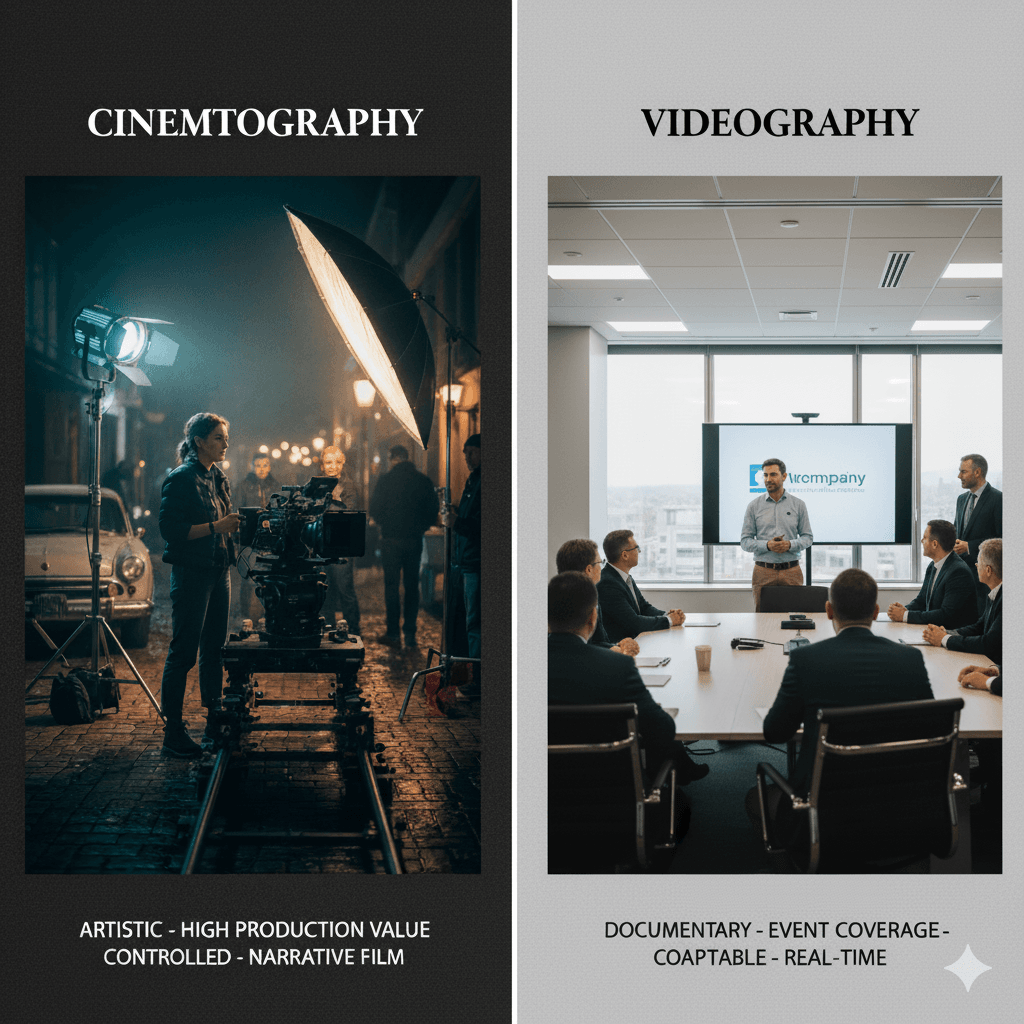
Cinematography is where art meets technical knowledge in the world of motion-picture photography. When you watch a film and find yourself completely absorbed in the story, feeling exactly what the director wants you to feel—that’s cinematography at work.
The director of photography (or DP, as they’re called in the film industry) is basically the visual architect of a film. They don’t just point a camera and hit record. Instead, they’re making hundreds of artistic decisions about lighting, camera angles, shot composition, and camera movements. Every single frame is intentional. That moody lighting in a thriller? Planned. Those sweeping camera moves in an epic scene? Choreographed during pre-production work.
What makes cinematography special is its connection to the director’s vision. Directors of photography collaborate closely with production designers, the film crew, and other crew members to create a specific look and feel. They’re thinking about depth of field, lens choices, color grading—all the technical aspects that turn a simple scene into something that sticks with you long after the credits roll.
In the world of feature films, short films, TV shows, and music videos, cinematography is what separates a forgettable production from something that wins awards. These professionals often go to film school to learn not just how to operate high-end cameras, but how to use visual aspects to tell a story. It’s about artistic expression and creating a visual narrative that pulls viewers into another world.
The production process for cinematography involves a larger crew, extensive strategic planning, and usually a healthy budget. There’s art direction, special effects teams, and lots of post-production work, including sophisticated color grading and video editing. It’s not a small team operation—it’s a full-scale production with everyone focused on achieving maximum production value.
What is Videography
Now, videography is a different beast entirely. Where cinematography is about creating art, videography is about capturing real-time moments and documenting events as they happen. Think wedding videos, corporate events, live events, birthday parties, promotional videos, interview videos—basically any situation where you need professional video recording but don’t need a full film crew showing up.
A wedding videographer, for example, doesn’t get to say “cut, let’s do that kiss again with better lighting.” They’re working in real-time, adapting on the fly, and capturing important moments as they unfold. That takes a totally different skill set than working on a carefully controlled film set.
Videomakers typically work with a small crew or even solo. They’re the Swiss Army knife of video production—handling camera operation, audio recording, and often the entire editing process themselves. Their camera equipment tends to be more compact DSLR cameras, gimbals, drones, and portable audio equipment that lets them move quickly and stay nimble.
The editing tools videomakers use, like Adobe Premiere Pro, help them turn footage around quickly. Corporate videos need to be delivered fast. Wedding receptions get edited and sent to happy couples within weeks, not months. The editing skills required focus on efficiency and clarity rather than pushing creative boundaries with visual effects or extensive post-production work.
What video professionals bring to the table are strong communication skills and the ability to think on their feet. When you’re capturing events at corporate events or documenting wedding videos, you can’t control everything. The best man might forget his speech notes. The CEO might go off-script. A good videographer rolls with it and still delivers a polished final product that serves its documentary-style purpose.
Key Differences Between Cinematography and Videography
Alright, so what are the main differences? Let’s break it down in a way that actually makes sense.
Purpose: Art vs. Documentation
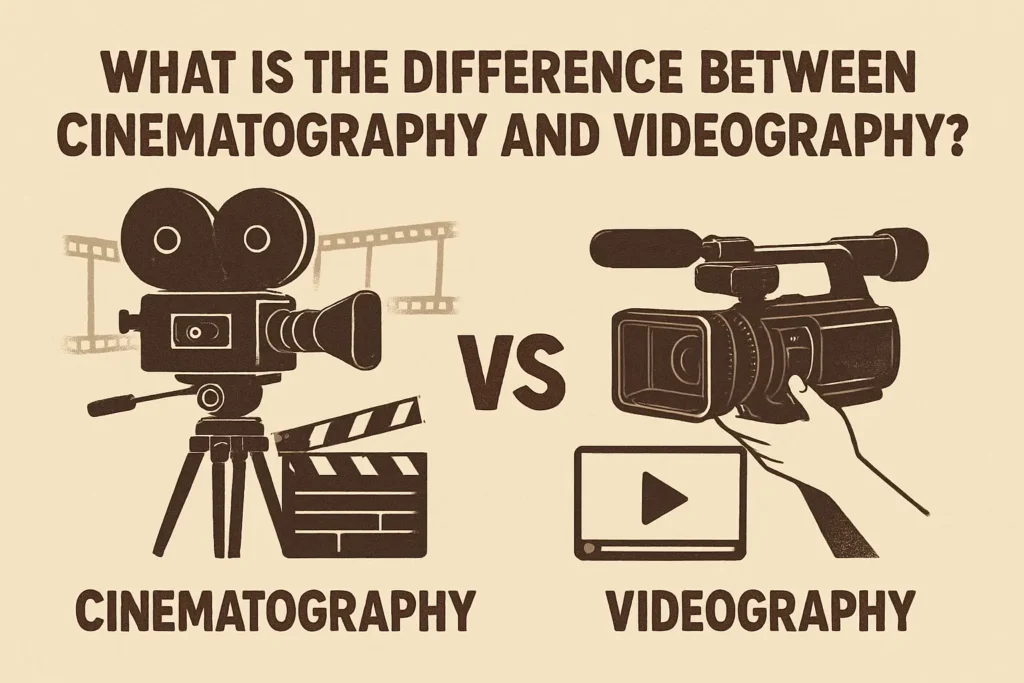
Here’s the big one. Cinematography is about storytelling and artistic vision. Every shot serves the narrative. Videography? It’s about documentation and capturing content creation as it happens. One is painting a picture; the other is recording reality.
The Planning Factor
Cinematographers spend weeks or even months in pre-production planning. They storyboard shots, scout locations, plan camera moves, and make artistic decisions before filming even starts. The creative direction is mapped out with the production team.
Videographers show up ready to adapt. Sure, there’s some planning—a wedding videographer knows when the ceremony starts—but most of the work happens in real-time. The production process is more about being prepared for anything than following a detailed shot list.
Equipment and Crew Size
Walk onto a film set and you’ll see high-end cameras, massive lighting rigs, and specialized video equipment everywhere. There’s usually a larger crew with specific roles—cinematographers, production designers, crew members handling lights, camera assistants, the works.
Compare that to a video professional at a corporate event. They might have one or two DSLR cameras, some portable lights, and maybe a drone. It’s efficient, mobile, and designed for a small team or solo operation. The camera equipment list looks totally different because the needs are different.
What You’re Actually Making
Cinematography creates feature films, short films, commercials for TV shows, and music videos. These are the things you watch at the cinema or see during the Super Bowl.
Videography produces wedding videos, corporate videos, event coverage, advertising videos, and video content for social media and YouTube. It’s practical stuff that businesses and individuals need, delivered without the massive budget of a Hollywood production.
The Money Talk
Let’s be real—cinematography costs more. Those high-end cameras aren’t cheap. A larger crew means more people to pay. The extensive color grading and special effects work add up. Even on a low-budget film production, you’re looking at a significant investment.
Videography is more accessible. A skilled video professional can deliver great corporate videos or wedding videos without needing the resources of large productions. That doesn’t mean it’s cheap—good videographers are worth every penny—but it’s a different scale entirely.
Essential Skills for Each Discipline
What Cinematographers Need to Know
Many cinematographers begin their journey at film school, although not all do. They need to understand visual storytelling at a deep level—how camera angles affect emotion, how lens choices change perspective, how shot composition guides the viewer’s eye.
The technical aspects matter too. Depth of field, lighting ratios, color theory for color grading, working with special effects, and visual effects teams. They also need strong editing skills because understanding the editing process helps them shoot better footage. It’s about seeing the final product in your mind while you’re capturing it.
What Videographers Need to Master
Video professionals need to be versatile. Strong communication skills are crucial because you’re dealing with clients at live events who might be stressed or emotional. You need to know your DSLR cameras inside and out, manage audio equipment without a dedicated sound person, and handle video recording in challenging conditions.
Editing skills are even more important for videomakers since they often do their own post-production work. Adobe Premiere Pro becomes second nature. Capturing events means being decisive—you can’t ask the bride to walk down the aisle again because you missed focus. Essential skills include quick thinking, technical knowledge, and staying calm under pressure.
When to Choose Cinematography vs Videography
So which one do you actually need? Here’s how to think about it.
Go with Cinematography If…
You’re creating something where visual narrative is everything. A brand film that needs to evoke emotion. A commercial that tells a story. A short film for a film festival. Basically, anytime artistic expression and creative direction are the priority.
Companies investing in high-production value brand content should lean toward cinematography. If you want something that looks like it belongs in theaters or on television shows, that’s cinematography territory. The director’s vision becomes reality through careful artistic direction and the collaboration of production designers and a dedicated film crew.
Choose Videography When…
You need to document real events. Wedding receptions, corporate events, birthday parties, interview videos, live streaming, promotional videos conferences—situations where capturing important moments matters more than creating a visual masterpiece. Videography excels at live events where things are happening once and you need to get it right.
It’s also the smart choice when budgets are tighter and turnaround times are fast. Need a corporate video edited and delivered in two weeks? That’s videography. Want social media content that looks professional but doesn’t require months of production? Videography again.
How Cinematography and Videography Work Together
Here’s where things get interesting. The lines are blurring. Modern content creation is mixing these approaches in cool ways.
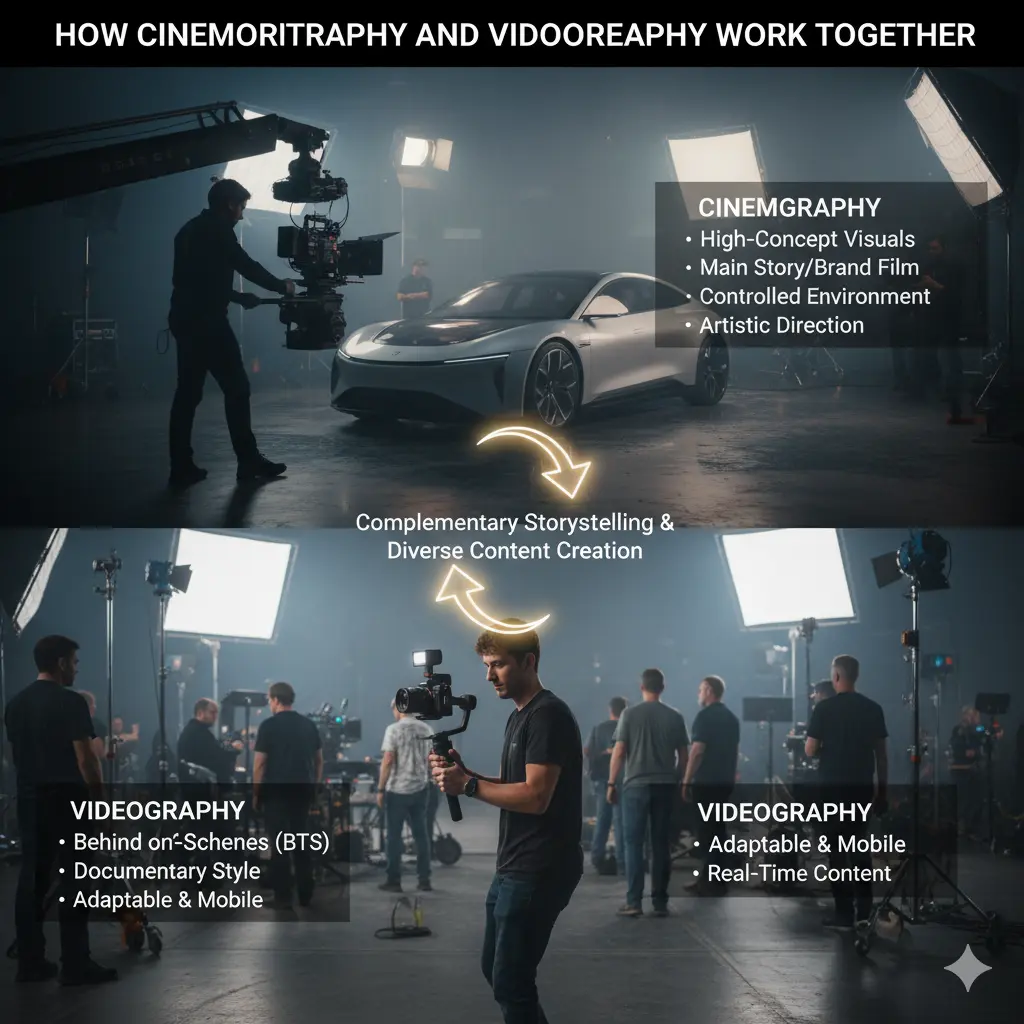
Many video professionals now combine cinematic techniques with videography’s efficiency. You might see wedding videos shot with the artistic vision of cinematography but produced with videography’s practical workflow. Corporate videos increasingly incorporate camera movements and color grading that used to be exclusive to the film industry.
Social media and digital marketing have created this hybrid space. Brands want video content that looks amazing—cinematic, even—but needs to be produced quickly and affordably. That’s where knowing both worlds helps.
Companies like Rtist Studio get this intersection. They understand when to bring full cinematography’s artistic expression to a project and when to work with the speed and flexibility of videography. It’s about matching the approach to the actual needs rather than forcing everything into one box.
The Evolution of Visual Content
Technology keeps changing the game. High-end cameras that were once only for large productions? Now accessible. Editing tools that required specialized training? Much more user-friendly. The camera equipment gap between what cinematographers and videomakers use is smaller than it used to be.
But the core distinction still matters. Cinematography prioritizes artistic direction and creating a visual story that moves people emotionally. Videography focuses on practical documentation and getting important moments captured reliably. Both require technical knowledge, creativity, and a genuine love for working with moving images.
The film industry respects both. There’s no hierarchy here—just different tools for different jobs. Feature films need cinematographers. Wedding videos need videographers. Sometimes projects need elements of both.
Conclusion
So what’s the difference between cinematography and videography? It comes down to intention and execution. Cinematography is about crafting a visual narrative with artistic decisions, meticulous planning, and creative direction that serves a director’s vision. It’s art. Videography is about capturing real-time moments, documenting events, and creating practical video content efficiently.
Neither is better than the other—they’re just different. The film industry needs talented directors of photography bringing artistic vision to every frame. But equally, countless important moments at wedding receptions, corporate events, and live events depend on skilled video professionals who know how to capture life as it happens.
Understanding these key differences helps you choose the right approach for your project. Need a cinematic brand film? You want cinematography. Documenting your company’s annual conference? Videography’s your answer. Want something in between? That’s possible too.
If you’re looking for professionals who understand both cinematography and videography—who can bring artistic expression when you need it and practical efficiency when that’s what works—Rtist Studio helps create content that actually connects with your audience, whether that’s through carefully crafted visual storytelling or authentic event documentation.
At the end of the day, both disciplines exist to turn ideas into moving images that inform, entertain, or inspire. And that’s something worth celebrating.
Related Posts



Elmo Mohr
Hello my loved one I want to say that this post is amazing great written and include almost all significant infos I would like to look extra posts like this
Gay Abbott
Your blog is a treasure trove of valuable insights and thought-provoking commentary. Your dedication to your craft is evident in every word you write. Keep up the fantastic work!
Brenda Dare
Hi my family member I want to say that this post is awesome nice written and come with approximately all significant infos I would like to peer extra posts like this
Breanne Kub
Your blog is a true hidden gem on the internet. Your thoughtful analysis and engaging writing style set you apart from the crowd. Keep up the excellent work!